
Sourcing
Buying beautiful finishes manufactured abroad means that you will have to manage more variables.
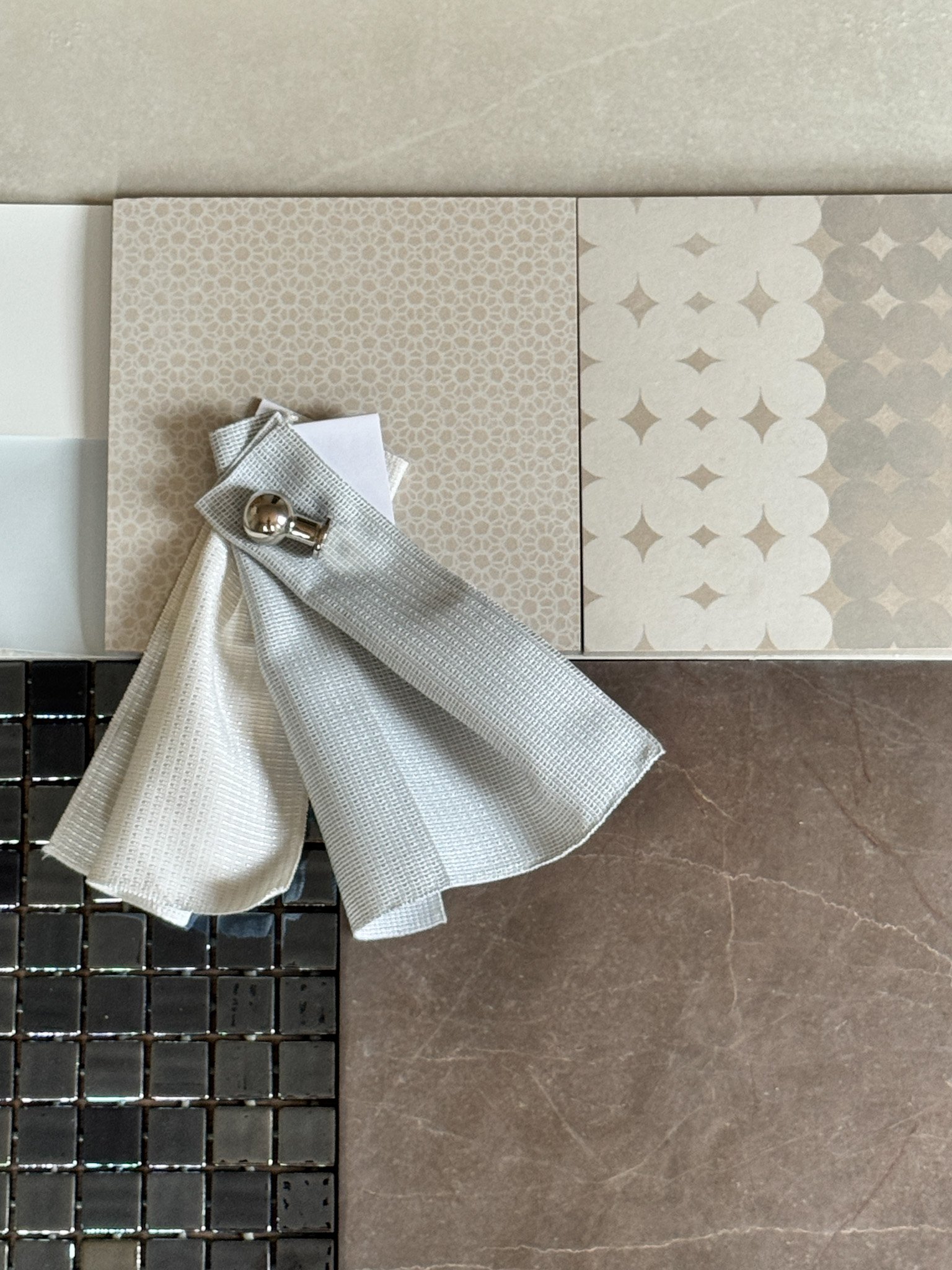
Products in image: Top Row: LA Tile @latileandstone; Middle Row: Stone Source; Mutina Ceramics; Textiles - Knoll Textiles; Cabinet Hardware - Corston; Paint Samples - Benjamin Moore; Bottom Row: LA Tile @latileandstone; Emser Tile
There's a moment in almost every project where a client falls in love with finishes they saw somewhere else — a stone from Portugal, a tile from Morocco, a hardware finish from Italy, a textile from India. And I get it. Some of the most beautiful, distinctive materials in the world simply aren't made here. If we want to give clients something that feels unique, sometimes the answer isn't domestic.
The internet has made the world smaller. That access has changed how people shop for their homes. Designers and clients alike search out inspiration from all over the world and try to bring a piece of it home, sometimes literally. I have clients who care deeply about where a piece comes from — family-owned workshops, women owned businesses, local manufacturers, made in the USA labels, companies that take environmental responsibility seriously. Sourcing well has become part of how people want to live, and sourcing internationally isn't as simple as adding an item to a cart.
The same internet that opened the world to us also trained us to expect it instantly. We want it now, and we want it shipped when you hit the “Order” button. Nowhere was this more obvious than during the pandemic. We had more time at home than most of us will ever have again, and yet everyone wanted the fastest delivery and the lowest price — often for pieces they assumed were temporary anyway. Meanwhile, the well-made stuff, the pieces built to last, got stuck. Domestic factories closed. Lead times stretched into months. So people turned abroad, to factories that had stayed open when ours had not.
We are past the pandemic now, but we have traded one set of problems for another: tariffs, customs delays, shipping timelines that shift week to week. Websites selling beautiful objects from overseas are everywhere — some absorb the tariff for you, some don't, and the shipping window is rarely as short as advertised.
So how do you buy well from far away? Here is what I walk my clients through before we commit to anything shipping in from overseas.
Know the country of origin. This is step one, and it's often skipped. Knowing where a piece is manufactured — not just where the company is headquartered — tells you almost everything else you need to know: what tariffs might apply, how long it will realistically take to arrive, and what standards it was built to.
Price. The sticker price abroad is often lower, but it rarely tells the whole story. Once shipping and tariffs are added, that "deal" can land close to, or above, a comparable piece made closer to home. Always price it all the way through before you place the order.
Lead time. Customs and international transit add time you can't always predict. If a piece is going into a project with a deadline, order it early — earlier than feels necessary. Bath and Kitchen fixtures arriving late creates a problem for the installer and the project.
Quality. This is the one I push hardest on. You often get what you pay for. Furniture such as an accent table or chairs can be purchased at a low price and then become disposable over time and you may feel you got your money’s worth. However, a lower price on something structural — doors, windows, engineered flooring — can turn into a very expensive problem a few years down the line. They are used every single day. When quality falls short on decorative items, you have a piece you love a little less. When it falls short on structural ones, you have a repair.
The trouble with a quality shortfall is that it rarely shows up on delivery day. The door looks fine. The floor looks fine. It's two, five, ten years later — when a floor starts to gap and cup, when a window seal fails, when a door frame swells and won't close right — that the original savings gets erased, usually several times over, once you're paying for materials, labor, and the disruption of redoing something that should have been done once. The upfront number was right, and the five-year number was very wrong.
Good design should hold up. Not just look good in photos on delivery day, but still be doing its job a decade from now. That's worth paying for, and it's worth asking the question before you buy, not after.
Trends. A lot of these sites are built around what's trending right now, which is exactly why they're so tempting to browse — and exactly why I ask clients to slow down before buying. A trend-driven piece can date a room quickly. I'd rather help a client find one thing with real character and a real story than five things that looked good in someone else's feed last month.
A recent find worth the wait. I recently ordered tile from Mutina, in Italy, for a project, and it's a good example of all of this working the way it should. Mutina collaborates with architects to design tile that are unique, beautifully made, and priced fairly for the quality you're getting. The lead time was long, longer than sourcing domestically would have been. I knew that going in, ordered early, and built it into the project timeline. The tile arrived and it was worth every week of the wait.
The world being smaller is, on balance, a wonderful thing. I love that a client can find a rug woven by hand on another continent, or that I can source something for a project that would have been impossible to find twenty years ago. I just want us all buying it with our eyes open — knowing where it's from, what it actually costs, when it will really arrive, and whether it's built to stay in the room for the long run.